
Alameda & Irvington Real Estate Photography: What Northeast Portland's Grand Homes Need
Late summer on Alameda Ridge, and the light doesn't quit until nine. The big-leaf maples along Regents throw long shadows across the pavement, sprinklers tick over lawns that have been tended for eighty years, and the brick Tudors and broad-shouldered foursquares catch the last of the sun on their west faces. A few blocks south in Irvington, the streets run straight and green under a canopy that predates most of the cars parked beneath it. This is Northeast Portland at its most photogenic — and the grand old homes here don't market the way a westside new-build does. Here's how we think about the media that sells them.
What Northeast Portland's Grand Homes Ask of a Camera
Alameda, Irvington, Grant Park, and Beaumont-Wilshire share a specific kind of listing: an older home with real architecture, on a real block, in a neighborhood people move here specifically to live in. The house is selling three things at once — the craftsmanship inside, the setting outside, and the fifteen-minute life around it. Media that works up here has to carry all three.
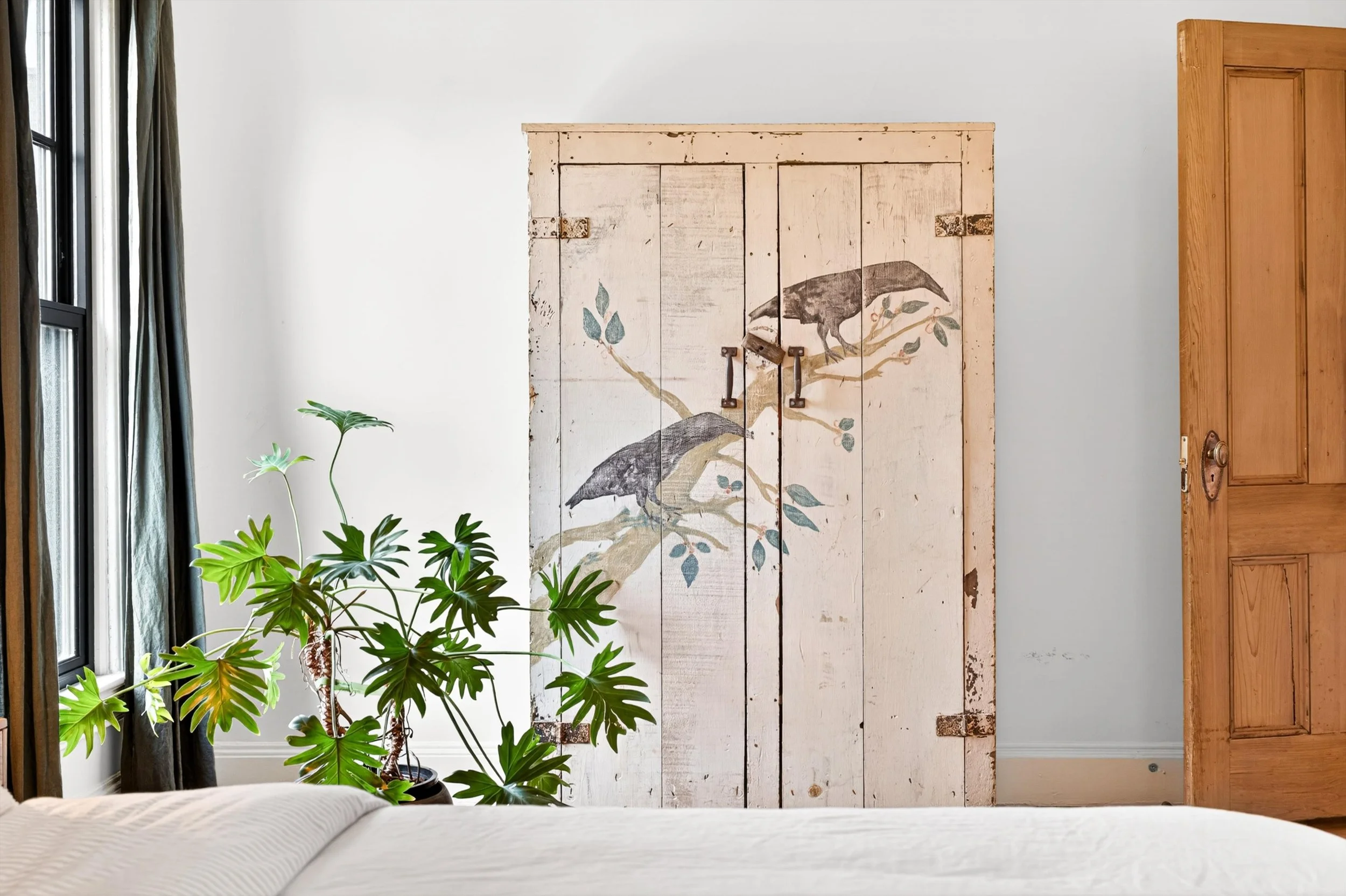
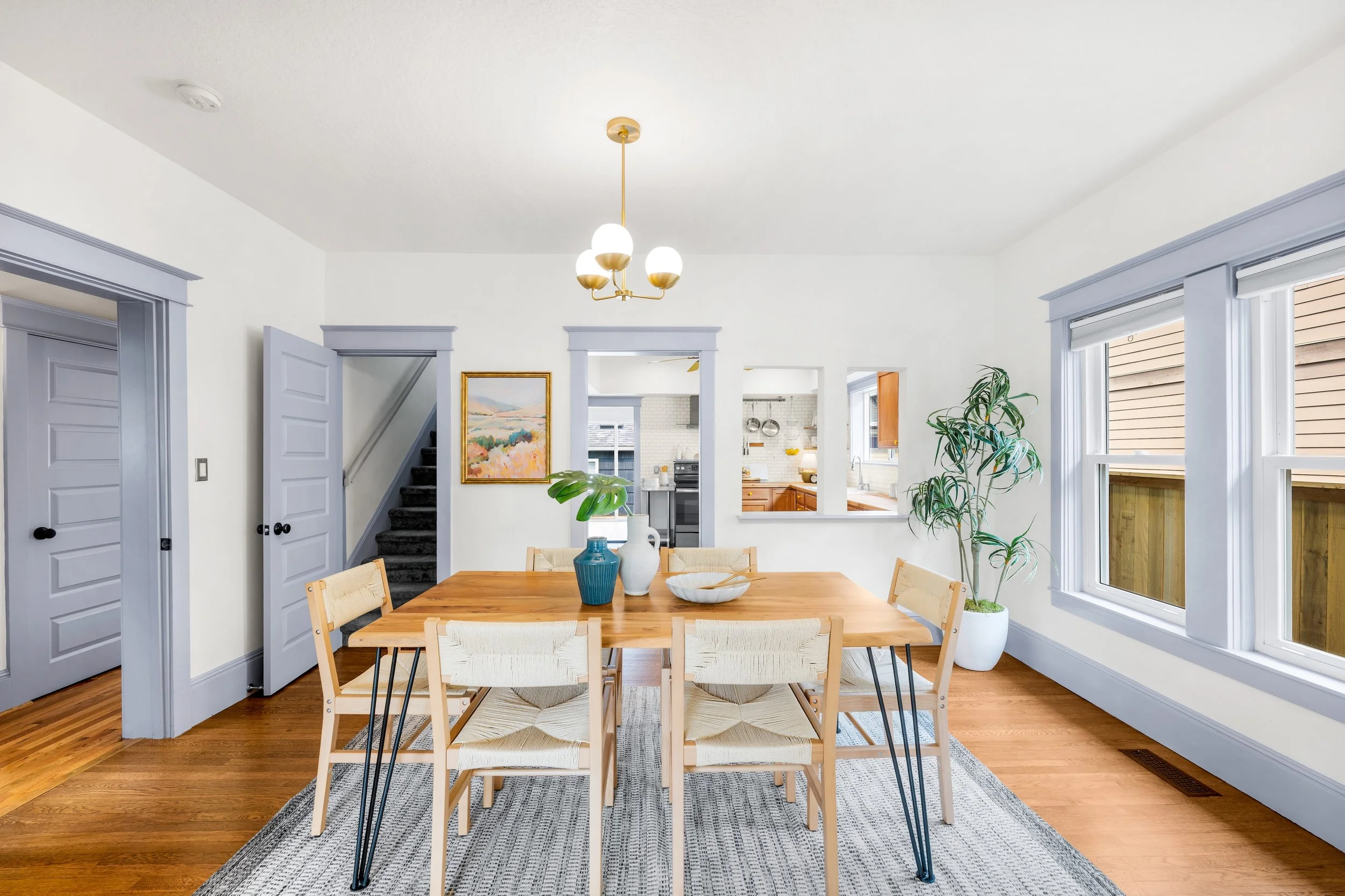
For the home itself, the job is to make character legible. These houses were built with coved ceilings, leaded glass, box-beam details, quarter-sawn oak floors, tiled fireplaces — the things a buyer falls for and no new construction can copy. We light and process our media so interiors read the way the room actually feels standing in it, warm and true, with the bright windows held in balance rather than blown out. On a home whose whole value is its detail, that care is the difference between documenting a house and making someone want to live in it.
When the Full Media Set Earns Its Place
1. The home has architecture worth featuring
If the listing still has its original built-ins, period tile, leaded glass, or refinished fir, that's the equity, and it deserves dedicated detail frames alongside the wide shots. The gallery should tell the full story: the feel of each room and the craftsmanship up close. On a genuine character home, that combination is almost always the foundation the rest of the media builds on.
2. The lot and the ridge give you elevation to work with
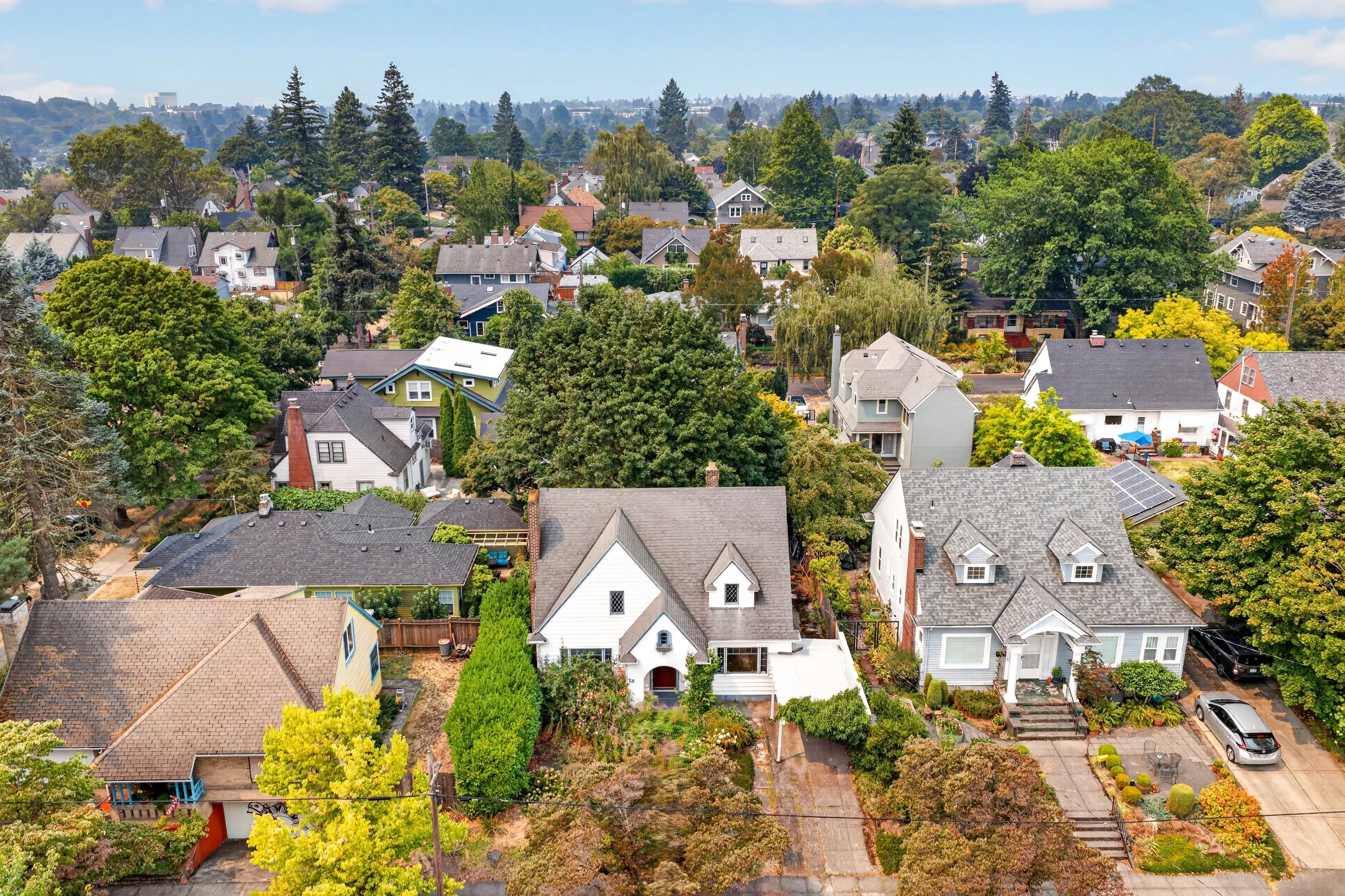
Alameda Ridge and the bluffs around it create views and lot relationships that simply don't read at eye level — a home's position above the street, a peek toward downtown or the Cascades, the depth of a back garden. Drone frames answer the question a buyer is quietly asking: where does this sit, and what's around it? Our Site & Location Overlays add-on can mark lot lines and nearby landmarks right on the aerial, which helps on the larger or corner parcels common up here.
3. The block is part of the price
Buyers pay a premium for these neighborhoods because of what surrounds the house — Wilshire Park, Grant Park, the shops and restaurants along Broadway and Fremont, Alameda and Irvington elementary catchments, the Sunday walk to Beaumont Village. Our Neighborhood Highlights add-on captures those places with real frames, not stock photos, so an out-of-area buyer understands the life they're buying into. In a walkable neighborhood, that context does work the interior shots can't.
4. A share of the buyers will be shopping remotely
These neighborhoods pull relocation and out-of-state buyers — people committing to a home from California, Seattle, or farther before they ever book a flight. A 3D tour is built for exactly that buyer. We offer both a Zillow 3D Tour and a Matterport depending on how much measurement detail the listing calls for, and either lets someone walk the floor plan at 11pm and decide the home is worth a Saturday. On the older, additive floor plans up here, that spatial clarity matters more, not less.
5. The season is working for you right now
Late summer into early fall is a gift for these blocks. The gardens are full, the canopy is heavy and green, and the low evening light flatters brick and stucco the way nothing else does. A natural twilight session — warm interior light glowing against a deep dusk sky — gives a higher-end Alameda or Irvington listing a signature lead image. It's worth booking while the trees are still full, before the leaves turn and the light goes flat for the winter.
Where the Spend Doesn't Pay Off
More media is not automatically better.
1. Drone over a flat interior lot
Aerial media earns its place on the ridge or a view lot. On a flat mid-block parcel where the neighbor's roofline sits fifteen feet away, an overhead frame mostly shows you the neighbor's roof. Unless the lot, a park backing the property, or the ridge position adds something, the drone is a line on the invoice that doesn't move a buyer.
2. Twilight on a home without evening presence
Twilight shines on homes built for it — landscape lighting, big windows, a welcoming porch, a garden that glows. A modest home with no exterior lighting and a plain front doesn't gain much from a dusk shoot, and the extra session can slow your launch. We'll flag when a home is a natural candidate and when it isn't, so it's an easy call either way.
3. Over-producing a home that already shows well
Some of these homes are so well-kept that a clean, complete photo set and an accurate floor plan are enough to launch strong.
The Strategic Question to Ask
Before you build the media package, ask: "What is this specific home actually selling — the details, the setting, or the block?"
An Irvington foursquare with original woodwork is selling its details, so the budget belongs in photography and a clear floor plan. A home on Alameda Ridge with a view is selling its setting, and drone and twilight carry it. A home near Beaumont Village is often selling the neighborhood as much as the house, and Neighborhood Highlights do the heavy lifting. Answer that first, and the right package tends to build itself.
Final Thoughts
Northeast Portland's grand old neighborhoods have a built-in advantage: the homes have soul, the streets are beautiful, and buyers already want to be here. The media's job is to make sure your listing looks as good online as the block feels in person, and to do it in the first few frames a buyer sees on their phone.
The trap is treating every home the same — full package on a house that doesn't need it, or a thin set on a home whose details deserved better. The right answer usually sits in between, and it depends on the house, the lot, and who's most likely to buy it.
If you've got a listing coming up in Alameda, Irvington, Grant Park, or anywhere across Northeast Portland, we're happy to walk through the property with you and talk strategy before you spend a dollar — which frames will earn their place, and which ones won't.
