
A covered table can look like the best part of a backyard until you see where it sits in relation to the kitchen. A deck can look generous in a photograph and still leave you wondering whether it opens off the living room or sits a flight of stairs below it. Those are small uncertainties, but they change how someone pictures using the property.
For Portland listings with more than one outdoor space, the photography brief starts with a question: what does the gallery need to explain about life outside? The answer may be as simple as the few steps from the stove to a covered table, or as involved as the way a hillside yard unfolds across several levels.
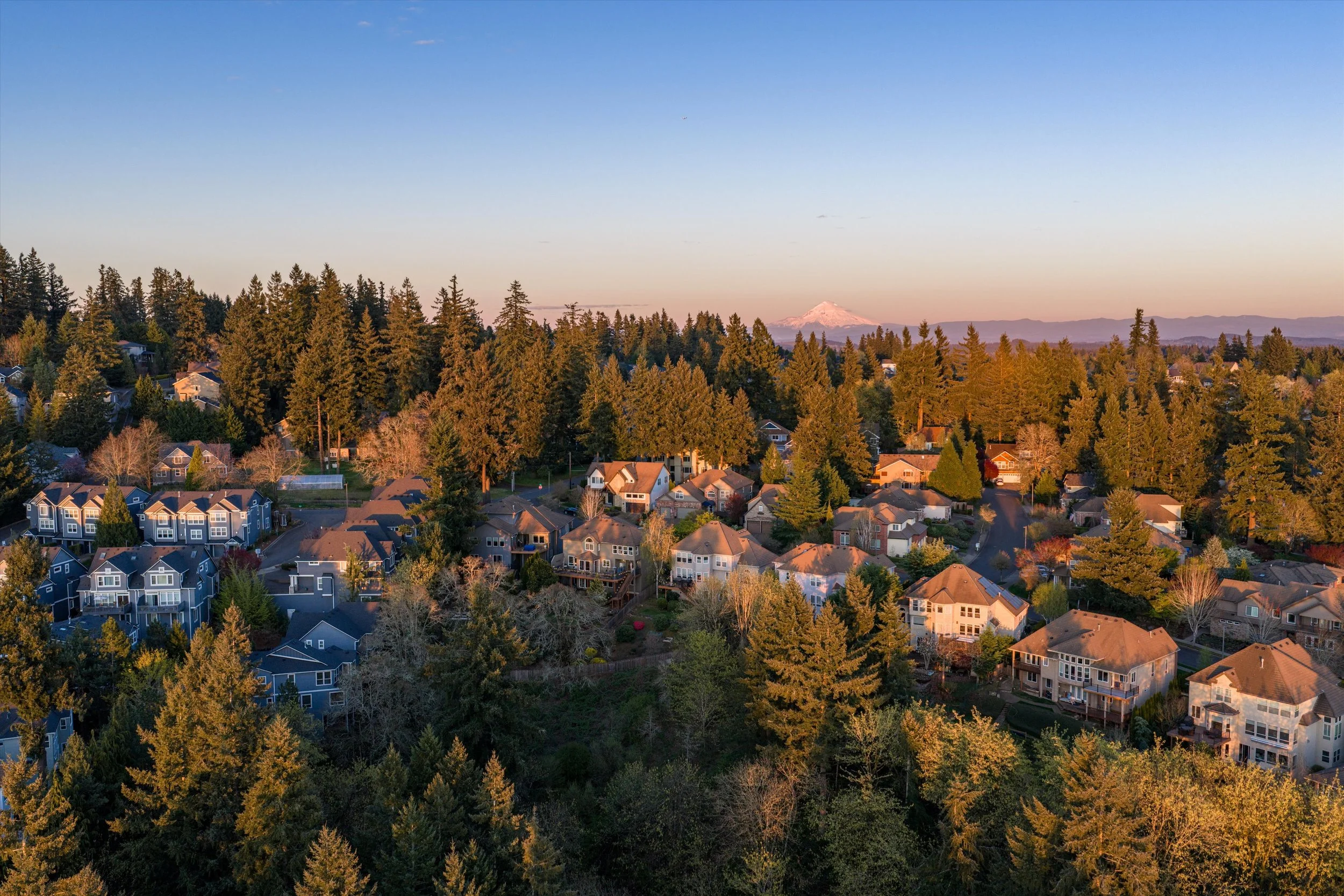
Lead with the outdoor space that explains the home
Start with the outdoor feature that best expresses the property’s appeal. If it’s a sheltered dining spot beside the kitchen, show enough of the house to establish that relationship. If it’s a garden designed as a destination in its own right, give the garden a photograph that shows its depth, where the paths lead, and how the planting defines the space.
A wide rear elevation can do that work when the arrangement is visible from one spot. In a compact yard, a view across the patio toward the house might communicate more. The choice depends on what a viewer can understand at a glance: which door leads outside, where people gather, and how much usable space sits beyond the seating.
Put the connection in the gallery
The photograph between the interior and exterior can carry more information than either room portrait. A view from just inside the dining room might show the door, the covered table, and a strip of garden in one frame. The next image can move outside and look back so the viewer understands where they’ve arrived. In the gallery, place those images near each other.
Plan for the frame each placement gives you
A website banner, a vertical social post, and a brochure cover ask different things of a photograph. A wide view that beautifully connects a fireplace, seating area, and large window may lose one of those elements in a narrow crop.
Identifying the important placements before the shoot gives you an opportunity to discuss them while coverage is being planned. If the window and its outlook are central to the campaign, that relationship deserves attention in the formats where you expect to use it. The same is true of a tall entry, a long covered terrace, or a room whose appeal depends on its width.
This conversation can stay simple: where will the lead image appear, what needs to remain in the frame, and will text sit over part of it? Those answers help the media support the design of the campaign. They also make image selection easier when the website, email, and print pieces are being assembled.
Let video develop a different part of the story
Movement can give a feature a sense of arrival. For a home approached through trees, the transition from the entry to an open outlook may be especially expressive. For a property with connected outdoor areas, a sequence can reveal how the spaces unfold.
A short social video can build around one such moment. A longer film has room to establish the setting and explore several relationships. An agent appearance adds the opportunity to introduce a feature in your own voice, with the property providing the visual context.
PDX Real Estate Media offers a property-focused highlight, an agent-featured social reel, and a cinematic listing film. A listing-reel add-on also adapts footage from the film into a shorter vertical edit. Our real estate video services page outlines the options. Sharing the intended use early helps us discuss the format that fits your campaign.
Add a higher viewpoint when the layout needs it
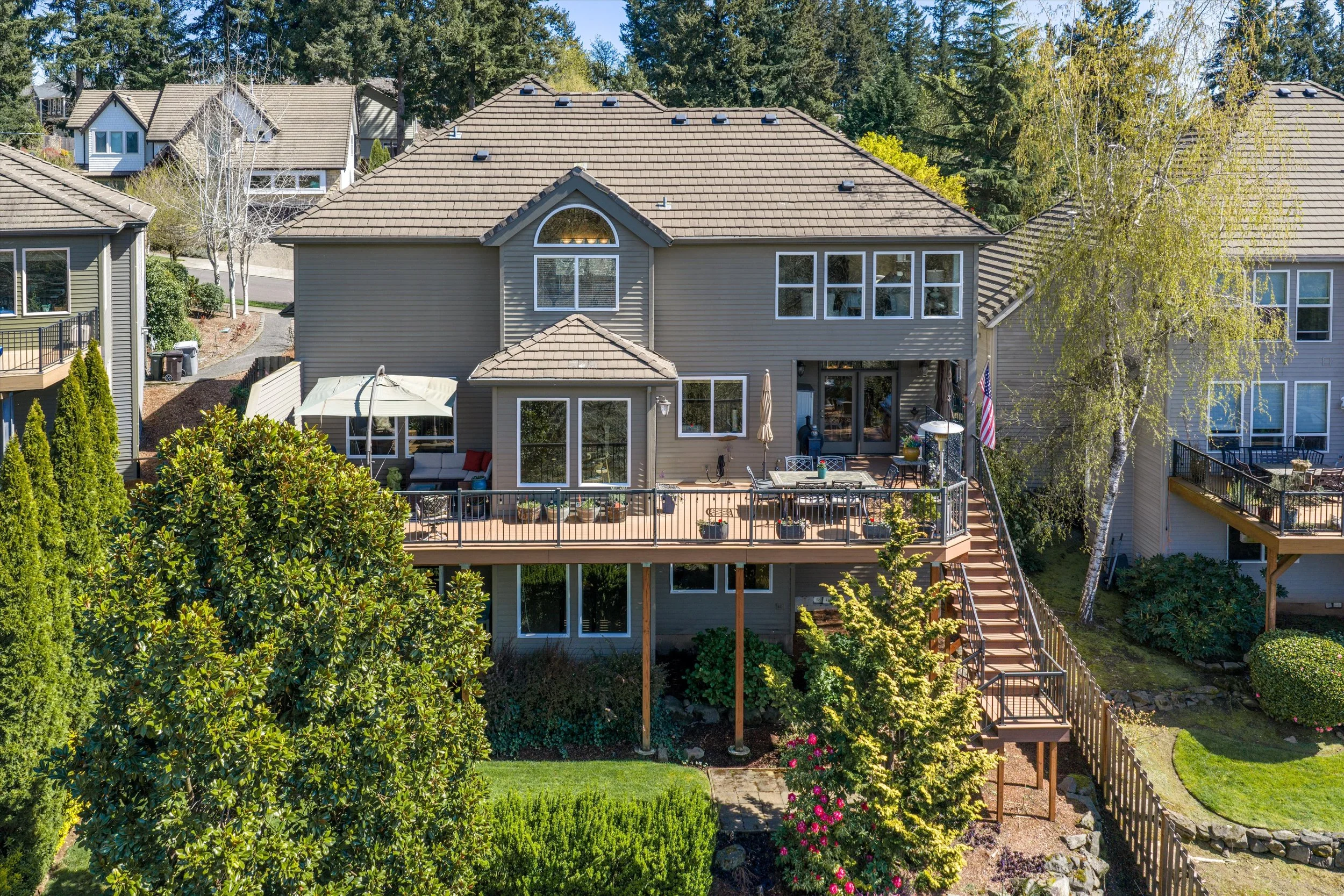
A ground-level sequence is often enough when the door, patio, and garden are easy to place. When grade changes or separate structures break that sightline, an aerial can show how the pieces fit. Think of a deck above a steep yard, where a wider view can place the upper and lower spaces in a single image. Put that overview near the ground-level photographs so viewers can use one to interpret the other.
For a shoot brief, identify the main outdoor feature, the route that makes it usable, and any second space that deserves a distinct view. That gives the photographer something specific to look for and makes it easier to sequence the finished gallery. At PDX Real Estate Media, our real estate photography covers the home inside and out, with exterior photography also available on its own.
