
Pearl District Condo Photography: What Actually Sells a Portland Loft
The light in a Pearl District loft is its own thing. North-facing glass on a gray Portland afternoon goes soft and even, the kind of light that flatters concrete and warms up white walls. Then the clouds break for ten minutes and the whole unit floods with contrast you weren't ready for. Across the street, a brick warehouse conversion holds its shadows until almost noon. Shooting condos here means reading windows, not just rooms.
The Pearl is not a suburban tear-down market, and it doesn't photograph like one. Tight footprints, shared amenities, and city views are the whole pitch. Here's how we think about Pearl District condo photography — what earns a buyer's second look in a slow condo market, and where the spend stops paying off.
When the Full Condo Media Package Is Worth It
1. View units and higher floors
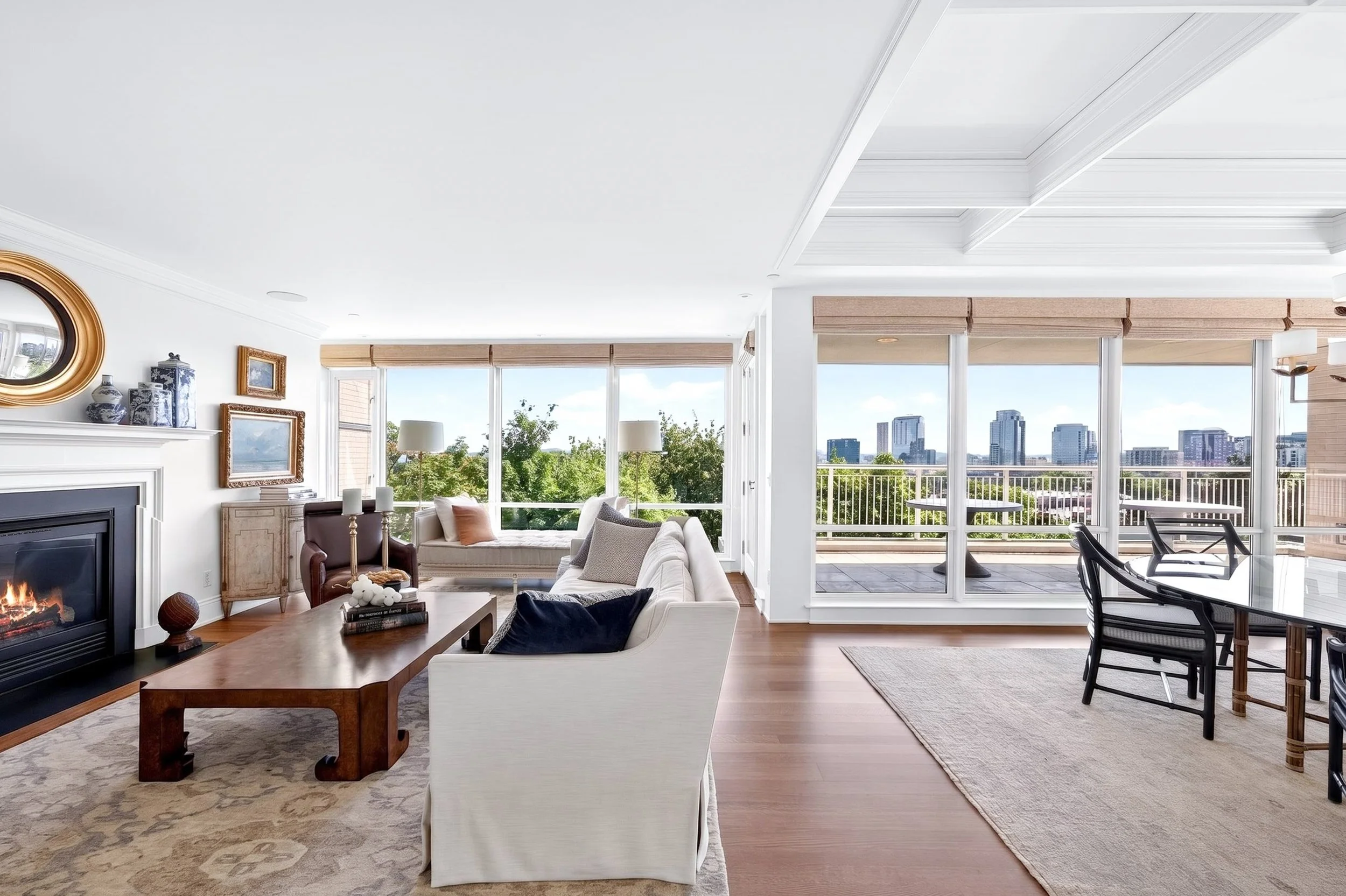
If the unit has a real view — the Fremont Bridge, the West Hills, downtown at dusk — that view is half the value and it has to be shot deliberately. We'll plan a window that catches city light coming on at twilight, because a glowing skyline through the glass does more for a Pearl listing than any interior angle.
2. Lofts and architectural conversions
The Pearl's warehouse conversions — exposed brick, timber beams, polished concrete, sixteen-foot ceilings — reward a slower hand and a wider lens. These are the units where detail shots earn their place: a beam-to-brick junction, the edge of a steel-frame window, light raking across a concrete floor. That texture is why someone pays Pearl prices, and generic photos flatten it.
3. Listings priced above the neighborhood median
Once a Pearl condo crosses well above the median — the larger two-beds, penthouse units, the trophy buildings — the buyer pool widens to relocating professionals and out-of-area buyers. That buyer expects a walkthrough video or a 3D tour as table stakes. Skipping it on a premium unit reads as a signal the agent under-invested.
4. Slow or relaunched listings
If a Pearl condo has sat 60, 90, 120 days on RMLS with rushed original photos, a full reshoot is almost always cheaper than another price cut. New stills, a twilight window for the view, and a short walkthrough can pull a stale listing back into top-of-feed placement and bring fresh showings within a week.
5. Buildings where amenities are the sell
Some Pearl listings are really selling the building — the rooftop deck, the gym, the lobby, the courtyard. When the unit is modest but the amenities are the differentiator, those shared spaces deserve real coverage, not an afterthought iPhone frame from the listing agent.
When the Big Package Pulls You Backwards
Not every Pearl condo needs the full treatment. Sometimes it's overhead that doesn't earn its place.
1. Smaller studios and one-beds at entry prices
A 600-square-foot studio in the lower price band sells on clarity, not cinematics. Clean, well-lit daytime stills and an accurate floor plan do the job. A twilight visit and a video shoot on an entry-level unit is spend the sale won't recover.
2. Units with no view and an interior-facing wall
Drone is pointless on a fourth-floor interior unit, and a "skyline" angle that shows the neighbor's brick wall ten feet away overpromises. Honest, bright interior photos that make the most of the actual light convert better than anything that sets up a buyer to feel misled at the showing.
3. The Friday-photo, Monday-live timeline
Twilight needs a second visit for that dusk window. Video takes most of a day. If the listing has to hit RMLS in 48 hours, we'd rather deliver a tight, well-lit photo set than rush mediocre versions of everything.
4. Rental-grade or investor units
If the buyer is an investor and the unit is a numbers play, the spreadsheet sells it, not the media. A clean photo set is plenty. The cinematic package is built for owner-occupants making an emotional decision, and that's not this buyer.
The Strategic Question to Ask
Before booking a Pearl District shoot, the question worth asking is:
"Is this listing selling a view and a lifestyle, or selling square footage and a price?"
If it's the former — a view unit, a loft with real character, a premium building — the media stack earns itself back in days-on-market, and in a slow condo market that's the whole game. If it's the latter — an entry studio where the buyer is comparing price-per-square-foot across six similar units — clean, honest photos and a good floor plan are the smarter spend. The shot list should follow the buyer, not the building's reputation.
Final Thoughts
The Pearl rewards listings that look like the neighborhood feels — soft north light on concrete, brick warming up at golden hour, the city coming on through the glass at dusk. Buyers shopping Portland condos have scrolled past hundreds of flat, dim, wide-angle-distorted units. They register the difference in the first three frames, and in a market where condos are sitting, those three frames decide whether your listing gets a Saturday showing or another week of silence.
There's a quieter payoff too. Agents who consistently bring the right media to Pearl listings tend to earn the next referral in the building. Boards talk. Neighbors notice which units moved and which lingered. The seller who got a clean, fast sale mentions your name over coffee.
If you've got a Pearl District condo coming up — a view penthouse, a brick-and-beam loft, or a tidy studio that just needs to look its best — we're happy to map the right shoot with you. Sometimes the answer is the full stack with a twilight window. Sometimes it's a focused photo set and a floor plan. Either way, it's worth ten minutes of strategy before the shoot is on the calendar.
