
3D Tours for Portland Real Estate: When Matterport Earns Its Place (And When It's Just Overhead)
A buyer in Bend opens a Portland listing on her phone at 11pm. She's been looking for three months, lives four hours east, and won't drive over until she's seen something she trusts. Twenty photos in, she keeps scrolling. Then there's a 3D tour link. She taps it, walks through the kitchen, looks down the hall, peeks into the primary bath, and decides this is the one she'll book a Saturday tour for.

That's the job a 3D tour does. It moves a buyer from "interested in pixels" to "willing to drive."
In a Portland market where inventory has loosened to a buyer's pace and listings can sit a little longer than they used to, the tools that earn a serious second look matter more, not less. But 3D tours aren't right for every property. Here's an honest breakdown of when they earn their place on a Portland listing — and when they're just an extra line on the invoice.
What a 3D Tour Actually Does
A 3D tour — Matterport, iGuide, Zillow 3D Home, or any of the close cousins — is a navigable digital walkthrough of the home, captured by a 360° camera at multiple points throughout the property and stitched into a model the buyer can move through at their own pace. The good ones include a dollhouse view (the whole home from above, in 3D) and an automatically generated floor plan.
The job it does for a listing is specific: it gives a remote buyer spatial confidence. Stills tell them what a room looks like. A tour tells them how the rooms relate to each other — how close the laundry is to the primary, whether the office sits next to a busy hallway, what you actually see when you walk in the front door. That spatial confidence is what gets out-of-state and across-town buyers from the listing page to a showing request.
The industry data points the same direction. Listings with a 3D tour pull substantially more engagement — Matterport and NAR figures put views up roughly 87% over comparable listings without one — and academic work has tied them to faster sales and slightly higher closing prices. NAR's 2023 buyer report had nearly half of all home shoppers calling virtual tours "very useful" in the search.
Portland is well-suited to it. A meaningful share of our buyers come from out of state, our floor plans skew old and quirky (Craftsman warrens, mid-century split-levels, basement ADUs), and rainy-season showings are easier to triage when the buyer can pre-walk the home from a couch.
When 3D Tours Are Worth It
1. The Home Has an Unusual or Multi-Level Floor Plan
A photo set can show every room and still leave the buyer confused about how they connect. Old Portland Craftsmans, daylight basements, mid-century homes with split entries, ADUs over a detached garage — these are the listings where a tour earns its keep. The buyer walks through the model, the layout clicks, and the friction that would have killed a showing request quietly disappears.
2. A Meaningful Share of Buyers Will Be Remote
If the listing is going to attract California, Bend, Seattle, or relocation buyers — common in the West Hills, Lake Oswego, and the close-in eastside neighborhoods — a 3D tour functions as their first showing. They'd otherwise need a video FaceTime walkthrough from the agent, and the tour does it on demand, at midnight, on a phone, without the agent in the loop.
3. The Listing Is at a Price Point That Justifies the Spend
3D tours aren't free. A professionally captured Matterport for a typical Portland home runs in the low-to-mid hundreds, with larger or higher-end homes higher. On a $300K condo with a simple footprint, that ratio looks heavy. On a $900K family home in Alameda or a Dunthorpe estate, it's a rounding error against the marketing budget — and the return is much higher.
4. The Property Will Sit, Not Sprint
In a fast market, a great photo set and a strong agent network can be enough — homes go before the marketing has time to compound. In the current Portland market, with healthier inventory and longer days-on-market on certain price tiers, 3D tours start working harder. Every additional buyer who self-pre-qualifies through the tour is a showing slot the agent didn't have to chase.
5. The Listing Has a "Why Doesn't It Sell?" Profile
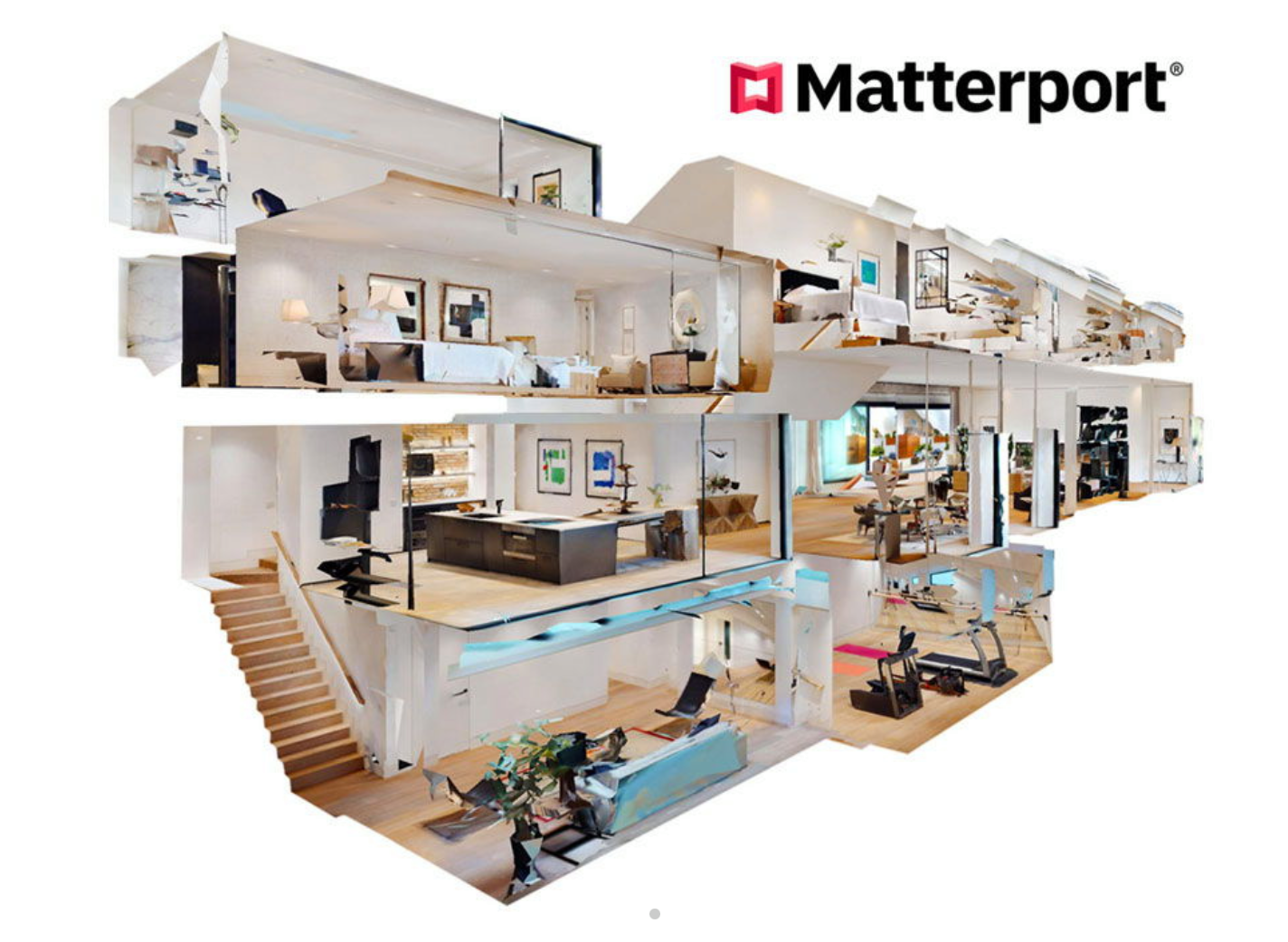
Larger homes, vacant homes, homes with one quirky feature buyers can't read from photos alone — these all benefit from giving the remote buyer a way to investigate at their own pace before requesting a tour. A 3D walkthrough lets the listing answer questions an agent would otherwise be answering one phone call at a time.
When 3D Tours Fall Flat
This is the part the providers don't lead with.
1. The Listing Is a Compact, Standard Layout Under Median Price
A 1,200-square-foot bungalow with a clean rectangular floor plan in a hot price band doesn't need a 3D tour. Buyers can read the floor plan from the photos, the home will go quickly, and the tour fee is overhead the seller doesn't need to absorb. Spend that money on twilight or short-form video instead.
2. The Home Hasn't Been Properly Prepped
Matterport sees everything. Every cord on the floor, every closet you didn't think to clean out, the corner of the laundry room nobody photographs. If the home isn't truly showing-ready on capture day, the tour locks that state in for every buyer who clicks. Photos can be selective. A 3D tour can't.
3. The Listing Is Selling Off-Market or Off-MLS Anyway
Pocket listings, pre-market exclusives, and properties that move through a private network don't need the public-facing engagement boost. The 3D tour is built to win the open-market scroll. If the buyer pool doesn't live in that scroll, the spend doesn't return.
4. The Agent Won't Use It in the Marketing
This sounds obvious, and it's the most common reason a 3D tour underperforms. If the link doesn't go on the RMLS, doesn't get pinned to the Zillow listing, doesn't appear in the email blast or the IG story, the tour is invisible. The capture is only half the value.
The Strategic Question to Ask
Before adding a 3D tour to a listing, the question isn't do they help in general — every credible study says they do. The real question is:
"On this specific home, will the tour be the thing that converts the buyer who's on the fence about driving over to see it?"
If yes — out-of-state interest, complex layout, higher price point, a property that needs to compound interest over a few weeks rather than spike in a weekend — the tour is one of the best dollars in the marketing budget. If no — quick-moving small home, simple plan, primarily local foot traffic — the same money does more work elsewhere.
Final Thoughts
3D tours earn their place in Portland marketing when they replace a showing the buyer otherwise wouldn't request. They lose their place when they're added to a listing that was already going to fly.
For larger, more complex, higher-priced, or vacant Portland homes — and for any listing fighting for out-of-state attention — they're one of the highest-ROI media tools an agent can attach. For smaller, simpler, faster-moving properties, the budget is better deployed against twilight, drone, or short-form video.
If you've got a Portland listing coming up and want to talk through whether a 3D tour is the right fit, or where it sits in a smarter overall media plan, we're happy to walk through the property and the strategy. The goal is the same on every listing: get the right buyer to the door, faster.
