
Neighborhood Photography for Portland Listings: When Local Context Belongs in the Media Plan
Early September in Portland has its own visual rhythm. The maples are full, sidewalks are dry, and evening light lingers on front porches and neighborhood paths. A listing can be photographed beautifully inside the property lines and still leave one question unanswered: what does the setting feel like around it?
That is where neighborhood photography can help. Used selectively, it adds location context to the main gallery, property website, brochure, or social campaign. Used without a clear reason, it can distract from the home or create compliance problems. Here is how we decide when Portland location imagery belongs in the plan.
What Neighborhood Photography Actually Does
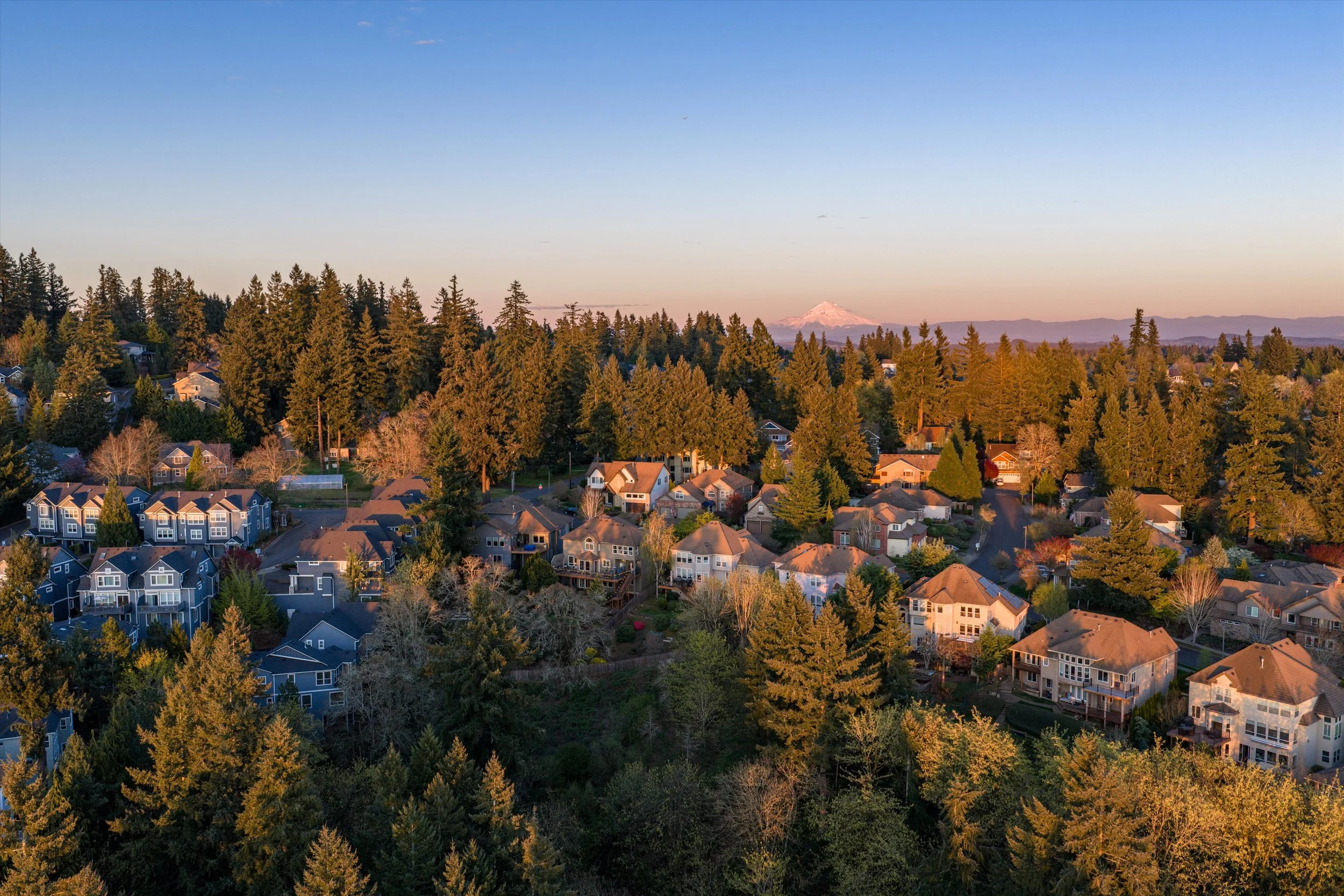
Neighborhood photography is a small set of images made away from the property to show one nearby feature that matters. It might be a Forest Park entrance near a West Hills home, the Springwater Corridor near Sellwood, a Lake Oswego plaza, or a Multnomah Village streetscape. The goal is not a travel guide. It is a clear sense of place.
Our Neighborhood Highlights add-on covers one nearby amenity, business, or attraction within five miles. For an MLS-friendly version, we focus on a public park, trail, or landmark and avoid identifying private businesses. For broader marketing, we can photograph a local destination for social media, a property website, or print. The deliverables differ because the rules and audiences differ.
This coverage complements the home. We still photograph the interior, exterior, wide views, and details the property calls for. Drone can show how the lot sits within the area, while a Site & Location Overlay can label approximate boundaries and public landmarks. Neighborhood images work at street level: the trailhead, river path, park entrance, or public place that orients someone seeing the address for the first time.
When Neighborhood Photography Is Worth It
1. The nearby feature is part of the listing story
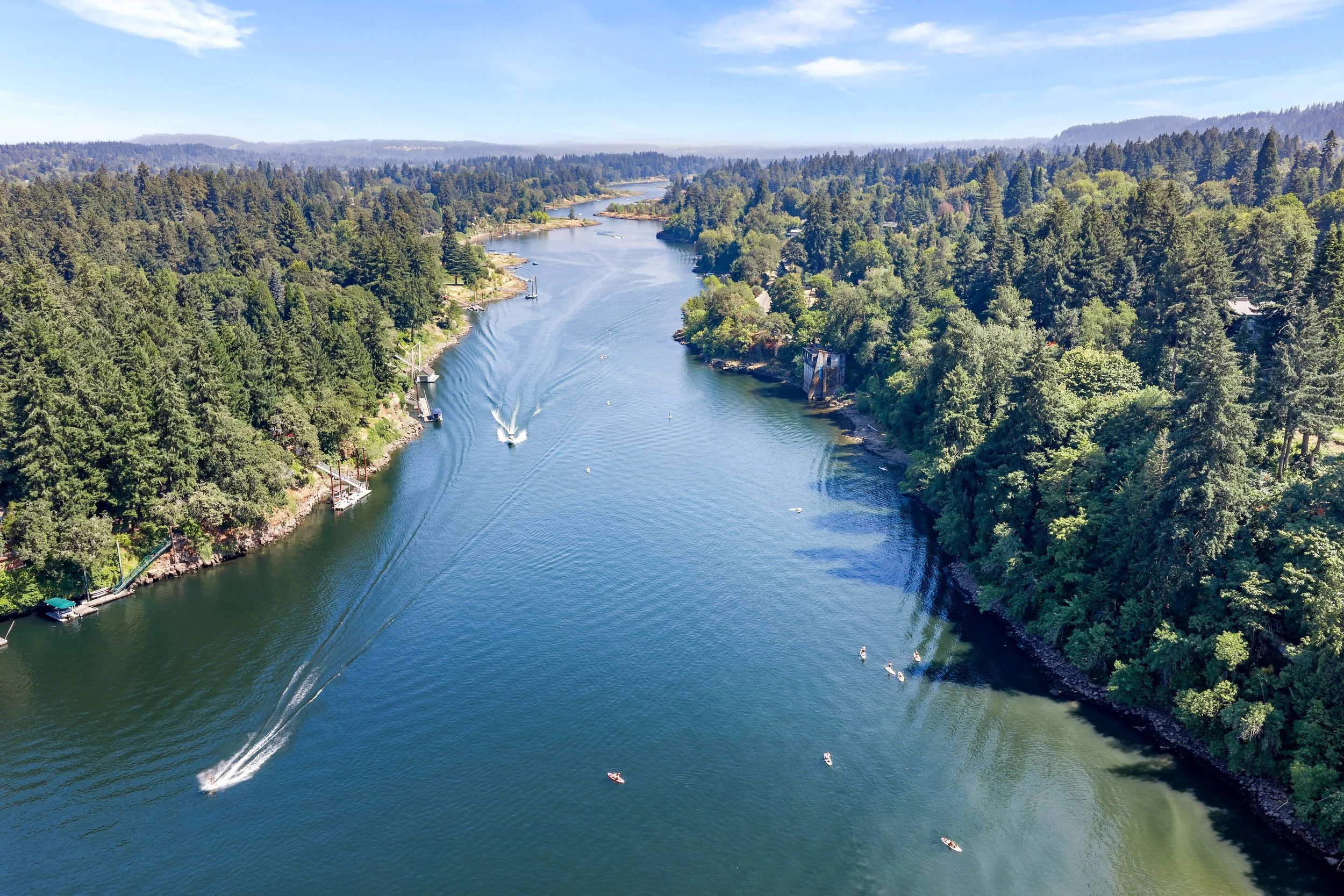
If the marketing copy leads with access to a park, trail, waterfront, or district center, the media should support that statement. A home near Mt. Tabor may benefit from one park image. A property close to the Willamette Greenway may need a clear view of the public path. The feature should be specific, relevant, and accurately identified.
2. The property and the setting work together
Some listings make more sense when the surroundings are visible. A West Hills home can be connected to its wooded context with ground-level imagery and aerial coverage. A St. Johns property may relate to a public viewpoint or the bridge in a way the front yard cannot explain. We add location coverage when it completes the visual story, not merely because a landmark is available.
3. The agent needs media beyond the MLS gallery
A property website, brochure, listing presentation, and social campaign have more room for context than an MLS sequence. Marketing-focused images can include local destinations and visible business names (client is responsible for MLS rule and third-party rights compliance). That can support a vertical video, carousel, or web page where the home and surroundings remain distinct parts of one story.
4. A public amenity gives the cleanest compliance path
RMLS Rule 3.8 allows labels for public amenities when they are not misleading, while prohibiting names or locations of private entities and businesses in listing photographs. Parks, trails, and public landmarks are therefore the practical choice for MLS-friendly coverage. Portland Parks & Recreation maintains searchable park and trail information, giving agents a reliable way to confirm official names, locations, and current access.
5. An overlay can explain what a photograph cannot
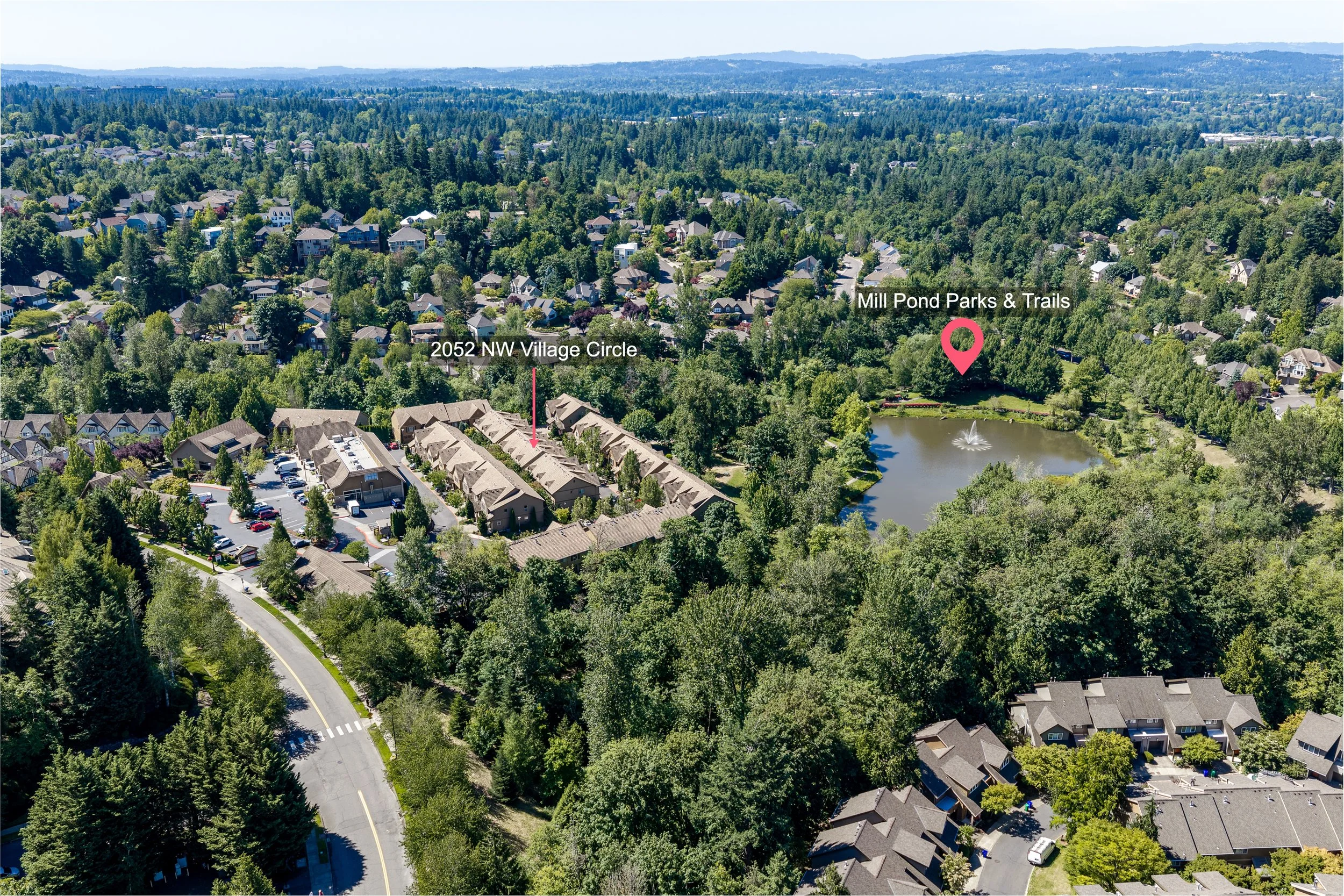
A photograph shows atmosphere. An overlay shows relationship. If the point is that a home sits near a trail, school, park, or public landmark, a Site & Location Overlay may communicate the geography more clearly than a standalone image. On acreage, a corner lot, or a property with an indirect approach, the overlay can add approximate parcel context. We choose the format based on the question that needs answering.
When Neighborhood Photography Needs Restraint
1. The feature is farther away than the copy suggests
A beautiful park can still be the wrong image if it is not meaningfully connected to the property. We avoid presenting a destination as immediate when the route, distance, or access does not support that impression. Travel times shift, trail access changes, and a straight map line may not match the actual route. Clear, modest wording keeps the image useful without overstating proximity.
2. Private business imagery is headed for the MLS
A favorite café or shopping block may fit social marketing, but visible names and signage are not the same as an MLS-friendly public amenity. We separate those files and intended uses at delivery. The agent remains responsible for current RMLS rules, brokerage guidance, platform requirements, and third-party rights. A compliance check belongs in planning, not after the gallery is live.
3. Lifestyle language starts describing people instead of place
Fair housing rules apply to advertising as well as listing remarks. We focus on factual property and amenity information: a public park, trail entrance, river access point, or commercial district. We do not use imagery to imply who belongs in an area, what household should live there, or which residents an agent hopes to attract. Show the place, describe the feature, and let the audience decide whether it matters.
4. The home already has the context it needs
Not every listing needs an off-site image. Photography, a floor plan, and well-chosen aerial views may already explain the property and setting. On a compact urban listing, an agent-feature social video may be the better addition. On a home with distinctive evening lighting, natural twilight may be more relevant. We ask what is missing, then choose the service that fills the gap.
The Strategic Question to Ask
“What location detail would be difficult to understand if we photographed only inside the property lines?”
If the answer is a nearby public trail, waterfront access point, park, landmark, or district center, neighborhood coverage may be a good fit. If the answer is simply that the area is popular, the image probably does not have a specific job. The strongest location photographs clarify something verifiable about this particular address.
We decide where the image will live before making it. An MLS gallery calls for public amenities, accurate context, and restraint around signage. Social media and property websites allow a broader local story, but still benefit from factual language and clear separation between the property and third-party destinations. Planning the channel first keeps one image from serving incompatible purposes.
Final Thoughts
Portland is a city of distinct settings. A Laurelhurst listing near its namesake park, a Sellwood home connected to the Springwater Corridor, and a West Hills property against Forest Park should not receive identical coverage. The point is not to collect landmarks. It is to identify the one nearby feature that helps explain the home.
When that feature matters, neighborhood photography can sit beside professional photography, drone, video, a 3D tour, and floor plans. When geography is the issue, a Site & Location Overlay may be clearer. When the gallery already feels complete, we can leave the neighborhood out. Each piece needs a distinct job.
If you have a Portland or Southwest Washington listing coming up, we are happy to talk through the setting on a quick call and decide whether Neighborhood Highlights, aerial coverage, or an overlay belongs in the package. Our current options and starting points are on the pricing page, and we can match the media plan to the property without adding coverage that does not clarify the story.
